Teaching With Style: 3rd grade

Showing posts with label 3rd grade. Show all posts
I am linking up to TBA's Open House Week!  Today is all about parent communication at the beginning of the year.

Do you like to send home a Welcome Letter to parents, telling them all about your classroom rules and procedures?  Last year I changed up my letter from a two-page long narrative letter (Hello, who actually read it??) to the most important bullet points in easier to read chunks and fun graphics.

Here it is, hanging under my "News" bunting
Would you like a Welcome Letter for your class, as well?  You are in luck!  I made my letter an editable document on my Google Drive, complete with the cute clipart and the schedule page in black and white for easy copying and also in color for you to display in your room.  You're welcome :)


Do you usually send home a welcome letter?
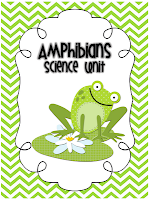
photo of Teaching With Style Amphibian Unit

In 3rd grade in Oregon, we have science standards about living things and life cycles.  I've been working on prettying up my unit with fun colors and graphics to share with you.  I finally finished it and it is ready to show the world.

Introducing, my new Amphibian Unit!!

Photo of Teaching With Style Amphibian Unit
Awards for behavior management

photo of Teaching With Style Amphibian Unit
Organizational tools like book labels, binder covers, binder spine inserts, and more!

photo of Teaching With Style Amphibian Unit
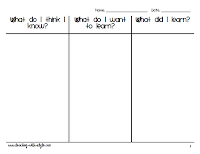
KWL with teacher directions
photo of Teaching With Style Amphibian Unit
Colorful vocabulary posters
photo of Teaching With Style Amphibian Unit
large vocabulary cards with kid friendly definitions

photo of Teaching With Style Amphibian Unit

photo of Teaching With Style Amphibian Unit
Cloze activity to gain information and support vocabulary development

photo of Teaching With Style Amphibian Unit
Personal dictionary

photo of Teaching With Style Amphibian Unit
Life Cycle labeling activity

photo of Teaching With Style Amphibian Unit
Parts of a Frog labeling activity
I am so excited about this unit and I know you will love it, too!  Head on over to my Teachers Pay Teachers store, where I have it for sale for $7.50.  The first 3 people to comment below with their email address will get it for free!

What other animals do you use to teach life cycles and living things?  What animal should I base my next unit around?

I'm joining up with another one of my blogger friends, Mary from Sharing Kindergarten, for another fun linky party: My Favorite Things.


I really love my Macbook Pro computer! I'm addicted to FB, Pinterest, and reading teacher blogs!

Another thing I am obsessed with is college!  I love taking courses and I'm not sure I'll ever be officially "done" with school!  The class I took this spring had most of reading assignments as articles in PDFs, so I bought myself a Kindle so I wouldn't have to print them all out.  It is AMAZING!  Plus, I got to read Fifty Shades of Grey on the airplane last weekend and no one knew! :)

Lately, something that has been making me really happy is my Birchbox subscription.  Birchbox costs $10 a month and they send you large samples of beauty products.  Last month I got an awesome chapstick, an elastic headband, some perfume, some makeup brush cleaning solution, and nail polish.  It's super fun to get each month and it's not a big commitment at all.  If you are interested in joining, click here!!
In my classroom, the one thing that has made the biggest difference in the past couple of years is my implementation of the Daily 5.  So my big surprise is that I am teaming up with Melissa at Seusstastic Classroom Inspirations to host a grades 1-2-3 Book Study for the Daily 5! 

We have an awesome crew of other teacher bloggers who are joining us for the fun!  Each chapter will feature teacher bloggers from each of the grade levels, we will host linky parties so you can join in and tell us how you use the framework in your classroom, and we also will be adding in some freebies to help you implement next year!  

Who's as excited as I am for this???


Thinking Out Loud
First Grade Blue Skies


Castles and Crayons

DillyDabbles


Fabulously First


Surfin' Through Second
I spend a lot of time teaching my students how to problem solve.  My grade level team does a Problem-a-Day format and works through a whole sheet together as a class.   This shows the students the steps to take in solving a problem, how to know what strategies to use, find the important vocabulary, show your work, and verify that their answer is correct.  My third graders had a really hard time with this, so whole group direct instruction worked well for me, as well as TONS of repetition.  We also have laminated giant posters to do it as a whole group instead of each student having their own sheet every day.  As another option, I have had the kids do it inside their math journals or on scratch paper.  After the kids get the hang of the routine, these are great ways to check in and keep up the skills.  To learn more about where this Four-Step problem solving method came from, read this article from Scholastic.


Once the kids have this scaffolded format down, we move to a less structured format.

I always have them do a Problem of the Day after they finish their Morning Work activity sheet.  I have a large flip book of math story problems from my district's old McGraw Hill math adoption.  It's great!   They just sketch this graphic organizer out themselves on scrap paper.  

How do you teach about word problems and problem solving?
I am gearing up to teach a unit on fractions.  In the state of Oregon, students don't learn fractions until 3rd grade.  I am thankful that Common Core will start them earlier, because they can be a hard concept to grasp!

I started out my unit by using Lindsey The Teacher Wife's Fraction Fun unit last week.  We did her sort and made the little books.  I also loved the posters to add to my math wall as the students learned the vocabulary words denominator and numerator.

My district uses the math curriculum Bridges in Mathematics from The Math Learning Center.  Bridges has some great lessons, but they needed to be supplemented with some paper pencil practice (gotta pass that state test!).  You can find ALL of the Bridges supplemental practice pages for free on their website:
These are wonderful ways for my students to practice skills as morning work, or for students who are struggling with the concepts.  Spanish versions are also available.

Another curriculum my district uses for grades 3-5 is Digging into Mathematics.  This is a series of three workbooks per grade level that are based on NCTM's focal points (the way Oregon's math standards are organized, too).  In each workbook, there are lesson overviews, vocabulary words, learning targets, practice pages, and a skill check.  I plan to use Digging into Math as the intro to each standard, then teach a corresponding Bridges lesson, then follow up with the Digging into math skill check.  The skill checks are short - only 5 questions, so they do not take long to grade.  If I stay on top of the grading (crossing my fingers!!!), I should be able to pull students who did not do well on the skill check each morning and do some re-teaching with the Bridges practice pages and other worksheets from the web.  

I plan to do two extra lessons that are not included in our curriculum: one to teach greater than/ less than (that I will tell you about next week) and one to teach parts of a whole.  Remember this book the Hershey Fractions Book that I got from Goodwillbooks.com?  

I made a worksheet with a Hershey's bar on it for the students to manipulate and move around as I read the book.  Just copy a half class set on brown construction paper and cut in half.  Using real Hershey's bars would be better, but when you have 31 kids in your class, that kind of stuff adds up quickly!

Here is the worksheet on Google Docs for you to use:

How do you teach fractions?  Do you know of any great websites that teach to your state standards or the Common Core for math?  
These past couple of weeks, I have been linking up with the Clutter-Free Classroom to help organize my classroom a bit.  I've already purged old teaching materials and files, cleaned off an entire rack that now can house student materials,

re-organized a bookshelf for my teacher resources,

gotten rid of two half size filing cabinets, gave away my rolling cart of drawers to another teacher in my building.  I actually gave it away!  Woo to the hoo!
Adios!
And I started cleaning up my desk {can you believe I found 3 boxes of staples in my top drawer - 3! I don't think I need that many staples on hand!}.  I'll blog more about that process as it unfolds.  I'm about half way finished with my desk cleaning.
Ahhh!!  This desk will eat you alive!! :)

After reading this post over at the Clutter-Free Classroom and reading posts from the Sub Hub {awesome blog!!}, another thing I started working on is making a Sub Binder full of resources for my subs to have and an expanding file of Emergency Sub plans for when I have to be out last minute and don't have time to run down and get everything ready.  I usually have my subs continue with my regular curriculum, but when I can't be in the room to write my plans {"turn to page 453 in the math TE", "copy blackline 45", etc}, I need to have a back-up plan.  I usually take HOURS prepping for a sub, making sure the copies are ready, the TE's are opened to the right page and labeled with the subject, posters needed for the day are ready to be used, guided reading materials are waiting at the teacher table to be used with groups, and the classroom is clean and orderly.  It's exhausting.  I'd honestly rather teach for the day instead of spending all that time, just to have a random sub who has never been to my school not do the activities and have the kids do whatever they want all day long. 

Cute binder cover is a freebie from The Clutter-Free Classroom.
I made the sign for my expanding file, laminated it, and hot glued it to the front.
So, in an effort to be more efficient and organized, I set up my Emergency Sub Plans expanding file.  I have 5 different sets of basically the same structure, just different worksheets and books to read aloud.  I made the copies for Plans #1 and they are ready to go, organized by subject.  After I use these, I'll copy off Plans #2 so it's ready to go for the next time I have a last minute sub.

In my actual Emergency Plans, here are the resources I used:
  • Morning Work - I use worksheets and lessons from Time For Kids {my class has a subscription paid for by Donorschoose} or crosswords and word searches from Boggles World ESL.
  • Writing - Writing pages and prompts from What the Teacher Wants.  I pulled out 5 of them to use in my emergency plans.  The others I put in the writing center for student to choose during Daily 5. They love it!  I always include to book to read aloud to go with the prompt in my emergency plans
  • Reading Small Group - I have my sub do pre-made games from the book Language Games Galore: Comprehension and Critical Thinking, Gr. 3 from Creative Teaching Press {I got it on sale at my local teaching store, Learning Palace}.  They play the game and do a worksheet that goes with it.  Each game focuses on a comprehension strategy.  I have my sub do this with two reading groups.
  • Reading Whole Group - I have my sub do a grammar or conventions worksheet with the whole class from Education.com.  They have great FREE worksheets and activities for all grade levels.  I suggest checking them out {especially since Super Teacher Worksheets is now member-only!}
  • Health - I don't have a lot of time for health instruction, so it's an easy one for subs to do.  We have The Great Body Shop curriculum and get themed packets for each student every month with lessons and worksheets to go with it. I usually have the kids buddy read the packets and do one of the worksheets together.  Easy and fun 20 minute lesson, perfect for after lunch.
  • ELD {English Language Development} - My school does ELD school-wide, with a Walk to ELD model.  I teach a group of 18 Early Advanced/Advanced ESL and native speaking students, but sometimes ELD is cancelled due to ELPA testing or other things going on in the ESL department, so I prepared my emergency plans to be used with my regular class or my ELD class.  That means, supplemental materials and not the adopted curriculum.  I have a ton of books about grammar and parts of speech and worksheets downloaded from Education.com.  I have my sub read a book and have a discussion using structure sentence frames, then do a couple questions on the worksheet whole group, a couple with partners, and a couple individually {differentiating the I Do, We Do, You Do model}.
  • Math - Have I mentioned I like Education.com?? Well, my math sub lessons are from them, too!  They have great game ideas teaching different math concepts using playing cards.  I have my sub play one of those games on the document camera, against the class.  Then I have individual worksheets for the kids to complete after the game.  We use Bridges in Mathematics curriculum and it includes a great "Work Places" component {basically, math centers}.  The kids can play the math work place games if there is additional time at the end of the day.    
And here's a freebie - you can see how I typed up my Emergency Plans 1 here:

So that's it!  It took a couple of weeks for me to pull all these resources together, but I feel so good about having it all ready.  So if I get a cold, the flu, food poisoning, whatever.  I feel confident that an experienced sub or a brand new one to my building will feel successful in my classroom for a day.  What do you think?  What do you do for subs?  Do you spend hours of time like I used to?  Tell me all about it!